

History of Belize City
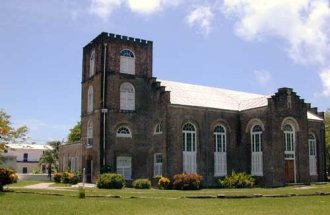 The first European settlement in Belize was begun by shipwrecked English seamen in 1638. Over the next 150 years, more English settlements were established starting at the mouth of the Belize River, and gradually extending inland. This period in Belize’s early modern history was one of piracy, slavery, indiscriminate logging, and sporadic attacks by the native Maya Indians defending their land. Both Spain and Britain lay claim to the land until Britain defeated the Spanish in a military skirmish known locally as the “battle” of St. George’s Cay (1798). The territory was declared a colony of Great Britain in 1840, known as British Honduras, and, thereafter became a Crown colony in 1862. Internal self-government was granted in January 1964. In 1973, the country changed its name to Belize. It threw off the British colonizers in 1981 when it became independent.
For those who want to tour historic Belize City, tour guides are available right outside the tourism village or via your hotel. As this is the heart of the old capital and still the country’s business and commercial center, visitors who want to walk the streets are encouraged to stay on Albert Street (southside of the Swing Bridge) and Queen Street (the continuation of Albert Street but north of the Swing Bridge). Recent challenges posed by the congestion caused by the influx of dozens of artisans and local competition for the tourists’ attention and sales has caused the City of Belize and the Tourism Board to step in to set up regulatory mechanisms to ensure both tourists and locals benefit without hassles.
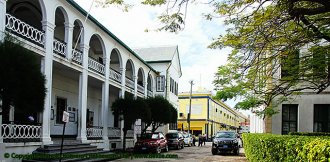 Near the tourism village is the historic Baron Bliss Lighthouse, named after a famous benefactor whose death is commemorated in a national holiday on March 9th . Outside of the tourism village area, visitors can purchase handmade wood furniture made by the Mennonite community and many kinds of craft items from the National Handicraft Center, (adjacent to the tourism village) as well as from the vendors who congregate near the Belize Commercial Center.
At the foot of the swing Bridge is the Marine Terminal and Museum, where an interesting collection of Belize’s’ marine heritage is on display. Just across the bridge down past the business center is a landmark of the colonial period, the former Government House, now the Belize City House of Culture. It offers classes and seminars in activities like visual and performing arts, music, photography and ceramic art. A permanent exhibit consists of a Silverware and Glass Collection which features a wide variety of authentic silver pieces dating to late 17 th and early 18 th century, including Tureens, Teapots, Crystal Wine Glasses. There is also a Furniture Collection which features English domestic furniture of simple and complex design within the late 18th and early 19th centuries. The Government House itself is an exhibit. Built in the early 1800’s, it is a combination of Caribbean Vernacular and English Urban architecture.
RELATED VIDEO

RELATED FACTS
-
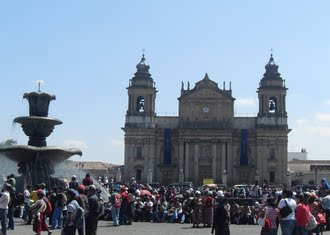 The Cathedral of Guatemala City, also Metropolitan Cathedral, officially Catedral Primada Metropolitana de Santiago, is the main church of Guatemala City and of the Archdiocese of Guatemala (Archidioecesis Guatimalensis). It is located at the Parque Central in the...
Share this Post
Related posts
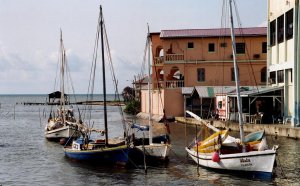
Images of Belize City
Belize City has been the area most affected in the country as an area of low pressure passing over the region has been dumping…
Read More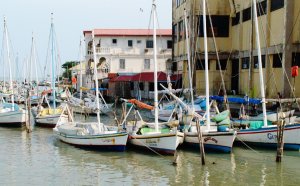
City of Belize
All travelers You should be up to date on routine vaccinations while traveling to any destination. Some vaccines may also…
Read Morelatest post
-
 Vacation Homes in Belize October 7, 2026
 -
 Flights from Belize City to Ambergris Caye September 29, 2026
 -
 Belize Vacation Package Deals September 21, 2026
 -
 Francis Ford Coppola Belize September 13, 2026
 -
 Belize Map with Cities September 5, 2026
 -
 Rentals in Ambergris Caye, Belize August 28, 2026
 -
 White Sands dive shop Belize August 20, 2026
 -
 Belize Travel Information August 12, 2026
 -
 Belize City Scuba August 4, 2026